SigAlert: The Complete Guide to California’s Traffic Alert System
If you drive in California, especially in Los Angeles, the San Francisco Bay Area, or Sacramento, you’ve almost certainly heard the term SigAlert. In 2026, with increasing traffic congestion, freeway construction, severe weather, and major public events, understanding what a SigAlert means can save you valuable time and help you avoid frustrating delays. Whether you’re a daily commuter, rideshare driver, truck operator, or visitor, knowing how the system works is essential.
This complete SigAlert guide for 2026 explains what a SigAlert is, its history, how it works, what causes one, where to check live updates, the difference between a SigAlert and a Traffic Advisory, and practical tips to avoid traffic delays.
What Is a SigAlert? The Official Definition
A SigAlert is the highest-level traffic alert issued by the California Highway Patrol (CHP) for major freeway incidents. According to the California Highway Patrol, a SigAlert is officially defined as “any unplanned event that causes the closing of one lane of traffic for 30 minutes or more.”
In simple terms, a SigAlert is not just regular traffic congestion. It is an official emergency notification indicating that a significant incident has blocked freeway lanes long enough to create major traffic delays. Once issued, the alert is immediately shared through multiple public channels, including the CHP Traffic Incident Information Page, radio and television stations, electronic freeway message signs, and popular navigation apps.
Although many CHP communication centers now typically reserve SigAlerts for incidents involving two or more lane closures lasting over 30 minutes, the official statewide CHP standard remains one lane blocked for at least 30 minutes.
Drivers frequently search for terms such as SigAlert today, California SigAlert, CHP traffic alerts, SigAlert map, and live freeway closures, making it one of California’s most searched traffic-related keywords.
The History of SigAlert and How the Modern System Works
The term SigAlert is unique to California and dates back more than 70 years. Contrary to popular belief, it was not created by a government agency. Instead, the system was invented by Loyd C. Sigmon, a radio engineer who revolutionized traffic reporting.
In 1955, Sigmon developed a specialized radio and tape recorder communication system used by the Los Angeles Police Department (LAPD) to rapidly notify radio stations about serious traffic incidents and emergencies. These broadcasts were originally called “Sigmon Traffic Alerts,” but the phrase quickly evolved into the shorter and more recognizable “SigAlert.”
Traffic reporter Bill Keene later referred to Sigmon as the “father of L.A. traffic reporting.” As California’s freeway network expanded, the California Highway Patrol (CHP) assumed responsibility for freeway traffic management and modernized the SigAlert system into today’s statewide digital network.
In 2026, the SigAlert system operates using advanced technology:
- Detection: Incidents are identified through 911 calls, CHP patrol officers, Caltrans roadway sensors, traffic cameras, and increasingly through GPS data from Google Maps, Waze, and Apple Maps, which can automatically detect sudden traffic slowdowns.
- Verification: CHP dispatchers verify the incident. If lanes are expected to remain blocked for 30 minutes or longer, a SigAlert is officially declared.
- Broadcast: The alert is instantly distributed across the CHP website, Caltrans QuickMap, Sigalert.com, digital highway message boards, local news stations, and navigation apps.
- Cancellation: Once all lanes reopen, CHP issues a “SigAlert Cancelled” notification, although traffic backups may continue for several hours afterward.
What Incidents Trigger a SigAlert?
Not every traffic accident qualifies as a SigAlert. The CHP issues SigAlerts only for major, unplanned events that significantly impact freeway traffic.
The most common causes in 2026 include:
- Major Traffic Collisions: Multi-vehicle crashes, overturned vehicles, jackknifed tractor-trailers, or accidents involving injuries that require lengthy investigations or cleanup.
- Hazardous Material Spills: Fuel leaks, chemical spills, cargo debris, or hazardous substances creating unsafe driving conditions.
- Police Activity: High-speed pursuits ending on freeways, officer-involved investigations, emergency searches, or active law enforcement operations.
- Fires and Natural Hazards: California brush fires, flooding, mudslides, fallen trees, rockslides, or downed power lines, particularly during wildfire and storm seasons.
- Infrastructure Failures: Sinkholes, collapsed pavement, broken water mains, damaged bridges, or malfunctioning overhead freeway signs requiring emergency repairs.
It’s important to understand that planned lane closures do not qualify as SigAlerts. Scheduled Caltrans construction projects, routine maintenance, and announced freeway closures are classified as Traffic Advisories, which are typically published well in advance.
How to Check Live SigAlert Maps and Traffic Updates in 2026
Staying informed before leaving home is the easiest way to avoid major freeway delays. Fortunately, several reliable sources provide real-time SigAlert information.
The official CHP Traffic Incident Information Page (cad.chp.ca.gov) remains the most accurate source, displaying active incidents, blocked lanes, locations, and estimated clearance times directly from CHP dispatch.
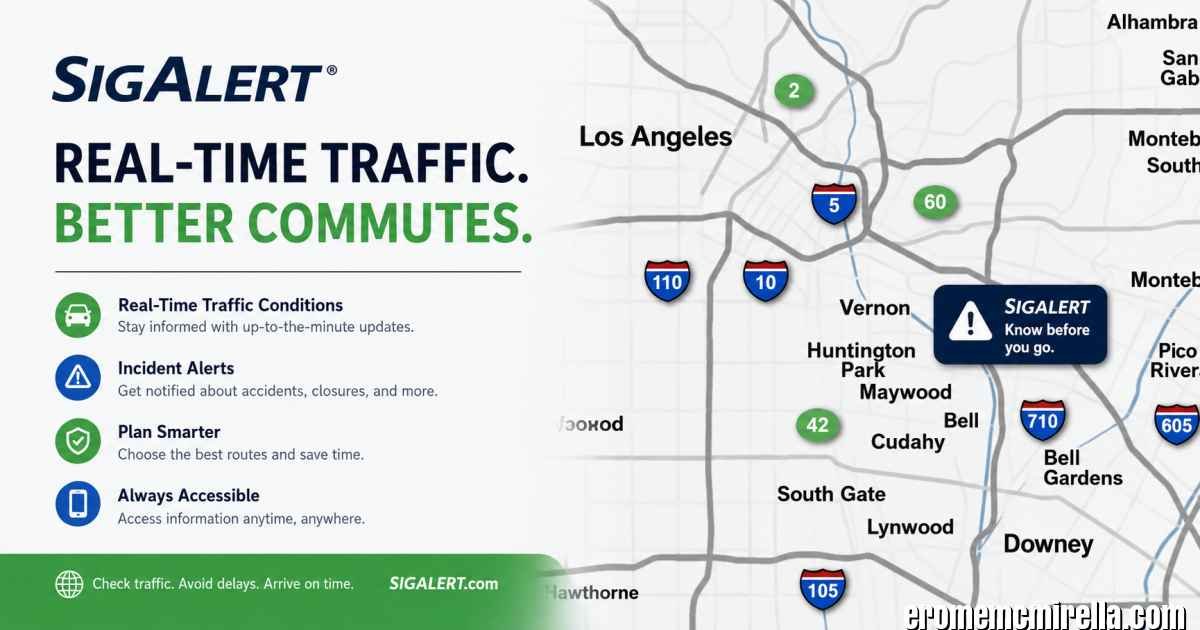
Another popular option is Sigalert.com, which provides live traffic maps, freeway speeds, incident reports, and traffic camera feeds across California. Many commuters in Los Angeles, Orange County, and the Bay Area rely on it daily.
The Caltrans QuickMap (quickmap.dot.ca.gov) offers an official statewide map integrating SigAlerts, road closures, chain controls, construction updates, and live CCTV traffic cameras.
Modern navigation apps such as Google Maps, Apple Maps, and Waze now integrate CHP traffic data directly, automatically rerouting drivers around major SigAlerts whenever possible.
Pro Tip for 2026: Enable traffic notifications on your smartphone. iPhone users can search for “SigAlert” in Apple Maps, while Android users can enable Google Maps traffic alerts and follow CHP incident notifications for their regular commute routes.
SigAlert vs. Traffic Advisory: What’s the Difference?
Many new California drivers confuse a SigAlert with a Traffic Advisory, but they serve very different purposes.
A SigAlert is issued only for unexpected emergencies. It signals that something serious has happened right now, causing freeway lane closures expected to last 30 minutes or longer. When you hear about a SigAlert on the radio or receive a mobile alert, it’s usually best to change your route immediately.
A Traffic Advisory, on the other hand, covers planned events such as Caltrans construction projects, scheduled maintenance, bridge work, or freeway closures for parades and sporting events. These advisories are usually announced days or even weeks before the work begins, giving drivers time to plan alternative routes.
Understanding this distinction helps drivers make better travel decisions and reduces unnecessary delays.
Why SigAlert Matters in 2026 and Tips to Avoid Traffic Delays
A SigAlert affects far more than individual commuters. In 2026, with the average Los Angeles driver spending more than 95 hours annually in traffic, a major SigAlert on Interstate 405 (I-405), Interstate 5 (I-5), U.S. Route 101 (US-101), or Interstate 10 (I-10) can disrupt transportation across entire metropolitan areas.
For commuters, delays can mean missed meetings, appointments, flights, and family commitments. For logistics companies and freight carriers, a SigAlert can delay thousands of deliveries and increase transportation costs. Uber, Lyft, and delivery drivers also experience reduced earnings when freeway closures significantly extend trip times.
Because of its importance, SigAlert remains one of California’s most searched local SEO keywords. News organizations such as KTLA 5, ABC7, and major radio stations including KNX 1070 AM continuously publish updates, helping millions of drivers stay informed.
To reduce the impact of SigAlerts:
- Check traffic before leaving using Sigalert.com, CHP, or QuickMap.
- Know at least two alternate routes, especially in Los Angeles where roads like Sepulveda Boulevard, La Cienega Boulevard, and Ventura Boulevard often provide valuable alternatives.
- Use Waze with CHP alerts enabled, as crowdsourced reports frequently appear before official announcements.
- Avoid peak SigAlert periods, particularly 7–10 AM and 3–7 PM on Fridays, when major freeway incidents are most common.
- Keep emergency supplies in your vehicle, including water, snacks, a phone charger or power bank, and sufficient fuel in case traffic remains stopped for extended periods.
Final Thoughts
The SigAlert system, invented by Loyd C. Sigmon in 1955, has evolved from a simple radio communication network into a sophisticated, AI-assisted statewide traffic alert system. Today, it combines CHP dispatch, Caltrans technology, live traffic cameras, GPS navigation data, and real-time mobile notifications to help millions of Californians navigate freeway emergencies.
Whether you commute daily on the 405 in Los Angeles, travel the 101 through the Bay Area, or drive Interstate 80 near Sacramento, understanding how SigAlerts work, where to monitor live updates, and how to respond quickly can save hours of unnecessary delays. By checking official traffic sources before every trip and using modern navigation tools, you’ll be better prepared for California’s ever-changing road conditions in 2026.
Frequently Asked Questions (FAQs)
1. What is a SigAlert?
A SigAlert is an official California Highway Patrol (CHP) traffic alert issued for an unplanned event that closes at least one traffic lane for 30 minutes or longer, causing significant traffic delays.
2. Who invented the SigAlert system?
The SigAlert system was invented by Loyd C. Sigmon in 1955, originally for the Los Angeles Police Department, before later being managed statewide by the California Highway Patrol.
3. Where can I check live SigAlert updates?
You can view live SigAlerts on cad.chp.ca.gov, Sigalert.com, Caltrans QuickMap, Google Maps, Apple Maps, and Waze.
4. What’s the difference between a SigAlert and a Traffic Advisory?
A SigAlert covers unexpected emergencies, while a Traffic Advisory refers to planned lane closures such as construction or scheduled maintenance.
5. Which California freeways experience the most SigAlerts?
Some of the busiest corridors include I-405, I-5, US-101, I-10, I-80, and other major urban freeways throughout Los Angeles, the Bay Area, and Sacramento.